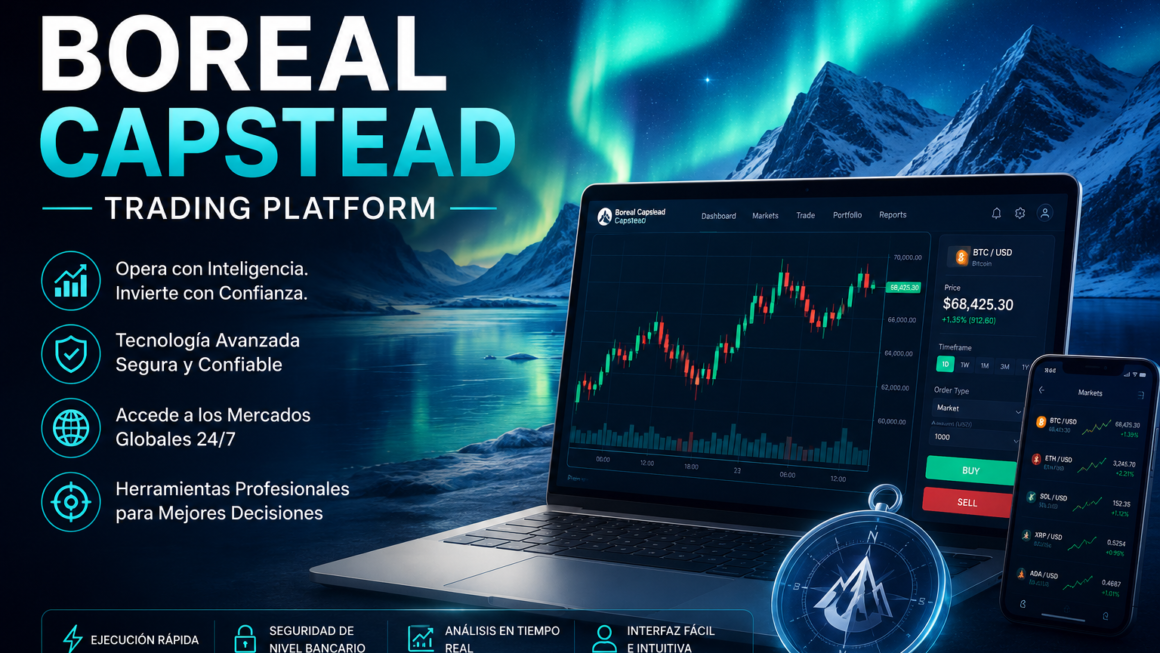
The landscape of retail and institutional trading is increasingly defined by how efficiently traders can bridge raw market data with disciplined, rule-driven execution. The Inditex AI Trading Platform positions itself at the intersection of modular automation and artificial intelligence, offering a framework designed to replace emotional discretionary trading with structured, repeatable workflows.
Unlike black-box systems that obscure their decision-making logic, Inditex AI emphasizes transparency, governance controls, and configurable operational parameters. Whether evaluating multi-asset strategies, setting risk boundaries, or automating session-based order routing, the platform is engineered to support autonomous trading bots and AI-enhanced market monitoring.
What is the Inditex AI Trading Platform?
At its core, Inditex AI is an automation-first trading architecture that combines modular strategy building with an AI-assisted execution stream. It serves as an ecosystem where traders can configure, test, deploy, and monitor automated trading workflows without needing to build complex infrastructure from scratch.
Key Operational Philosophies
- Modular Automation Blocks: Instead of rigid, single-purpose algorithms, the platform breaks trading workflows into discrete, configurable blocks—covering data intake, rule validation, position sizing, order routing, and audit logging.
- AI-Assisted Guidance: Artificial intelligence is embedded as an analytical assistance layer rather than an opaque decision-maker. It supports pattern recognition, parameter handling, and real-time operational status monitoring.
- Governance and Safeguards: The system prioritizes strict risk boundaries, ensuring that every automated strategy operates within predefined exposure limits, session windows, and drawdown thresholds.
Complete Inditex AI Platform Facts Table
The table below summarizes the core technical specifications, operational modules, and governance parameters of the Inditex AI Trading Platform.
| Specification Category | Parameter / Detail | Description / Capability |
| Platform Identity | Official Web Portal | inditexai. digital |
| Primary Architecture | Modular Automation Framework | Modular logic blocks for data, rule evaluation, sizing, and execution |
| AI Integration Type | AI-Assisted Guidance Layer | Pattern processing, parameter recommendations, and real-time status monitoring |
| Supported Workflows | Multi-Asset Execution | Configurable for foreign exchange, digital assets, equities, and commodities |
| Data Normalization | Cross-Venue Normalization | Standardized ingestion of price, volume, and order-book feeds across markets. |
| Order Routing | Latency-Optimized Pathways | Structured execution tracking with real-time slippage and fill logging |
| Risk Governance | Configurable Exposure Boundaries | Hard caps on total capital risk, per-trade leverage, and correlated exposure |
| Position Sizing | Dynamic Sizing Algorithms | Fixed lot, percentage-of-equity, and volatility-adjusted sizing models |
| Session Scheduling | Configurable Windows Session | Time-based filters to restrict bot execution to high-liquidity market hours |
| Audit & Compliance | Traceable Execution Trails | Immutable logging of every signal, rule check, and execution event |
| Onboarding Process | 5-Stage Structured Enrollment | Form submission, contact verification, alignment, risk setup, and activation |
| Security Standards | Enterprise Data Protection | Encryption of data in transit and at rest, plus role-aware access controls |
| Platform Scope | Technology & Marketing Platform | Provides automation infrastructure and tools; does not act as a direct retail broker. |
Core Capabilities and Functional Modules
Inditex AI categorizes its technical capabilities into three foundational layers: the Automation Sequence Blueprint, the AI-Enabled Assistance Layer, and Governance Controls
1. The Automation Sequence Blueprint
The blueprint defines how an automated bot transitions from analyzing raw market conditions to submitting orders. Each stage is modular, allowing traders to swap out individual logic blocks without rewriting the entire workflow:
- Modular Stages and Handoffs: Clearly defined handoffs between market data processing, technical indicators, and execution triggers prevent latency bottlenecks.
- Strategy Rule Grouping: Users can group rules logically (for example, combining trend-following conditions with volume-based confirmation filters).
- Traceable Execution Trails: Every action taken by a bot is logged in an immutable execution trail, allowing for granular post-session analysis and performance auditing.
2. The AI-Enabled Assistance Layer
Artificial intelligence in Inditex AI functions as a continuous copilot that monitors market structure and strategy parameters:
- Pattern Processing Routines: AI models scan multi-timeframe price action to identify volatility shifts, liquidity pockets, and breakout confirmations.
- Dynamic Parameter Guidance: Instead of static indicator settings that degrade over time, the AI assistance layer suggests adaptive parameter adjustments based on prevailing market regimes.
- Status-Aware Monitoring: The platform actively flags anomalies in execution latency, slippage, or spread widening, automatically pausing execution if conditions deviate from acceptable ranges.
3. Governance and Risk Controls
Automation without strict governance introduces catastrophic tail risk. Inditex AI addresses this through built-in control interfaces:
- Exposure Boundaries: Users define hard limits on total capital allocation, per-trade risk, and concurrent open positions across correlated assets.
- Order Sizing Rules: Supports fixed fractional sizing, percentage-of-equity models, and volatility-adjusted sizing algorithms.
- Session Windows: Strategies can be restricted to specific trading hours (such as the London–New York overlap), avoiding low-liquidity periods or news-driven volatility spikes.
The 4-Step Operational Workflow
To understand how Inditex AI functions in a live market environment, it is useful to examine its four-step operational sequence:
Step 1: Data Capture and Normalization
Before any trading rule is evaluated, the platform ingests market data feeds from supported venues. This data is cleaned, structured, and normalized into a uniform format. Stable data normalization ensures that technical indicators and AI models process clean price, volume, and order-book data regardless of the underlying asset class.
Step 2: Rules Evaluation and Constraints
Once data is normalized, the engine evaluates the user’s strategy rules simultaneously with governance constraints. An order is only authorized if both the strategic criteria (such as a breakout indicator) and the defensive safeguards (such as maximum daily drawdown remaining below 3 percent) are satisfied.
Step 3: Order Routing and Tracking
When an execution trigger is validated, the platform routes the order via latency-optimized execution pipelines. The order lifecycle is tracked in real time—monitoring fill speed, slippage, and execution price—to ensure accountability and precision.
Step 4: Monitoring and Refinement
During and after execution, the AI monitoring layer gathers performance telemetry. Traders can review structured status summaries, evaluate execution quality, and adjust modular parameters to refine ongoing automation routines.
The Registration and Onboarding Process
Getting started with Inditex AI involves a structured onboarding journey designed to align platform capabilities with the user’s specific operational requirements.
1. Enrollment Form Submission
The onboarding process begins on the official platform portal ( inditexai.digital). Users submit standard identity and contact details, including:
- First Name and Surname
- Professional or Personal Email Address
- Country Code and Mobile Phone Number
- Agreement to platform Terms of Service, Privacy Policy, and Cookie Policy
2. Contact Verification and Account Activation
Following form submission, users receive a confirmation notice via email or telephone. This verification step ensures that account credentials and communication channels are secure before accessing sensitive automation tools.
3. Guided Configuration Alignment
Once verified, users enter an interactive onboarding phase. During this stage, platform specialists or automated onboarding wizards assist in:
- Defining the primary trading objectives (eg, trend following, mean reversal, or portfolio rebalancing).
- Selecting target asset classes and liquidity venues.
- Configuring connectivity via secure API keys or broker integrations.
4. Parameter and Risk Boundary Setup
Before any bot is activated, users must establish their baseline governance controls:
- Setting account-wide drawdown stops and daily exposure limits.
- Defining session calendars and execution schedules.
- Assigning sizing models to individual strategy blocks.
5. Transition to Live Automation
With verification, alignment, and risk rules established, users can activate their automated workflows in either a simulated sandbox environment or live markets, supervised by the AI monitoring layer.
Risk Management Framework and Security Safeguards
A major differentiator in modern trading automation is how a platform mitigates technical and market risk. Inditex AI integrates several layers of protection:
Operational Risk Controls
- Capital Exposure Limits: Prevents any single strategy from deploying greater than a user-specified percentage of available account equity.
- Volatility Circuit Breakers: If market volatility exceeds historical norms by a defined standard deviation, the system can automatically suspend order generation to protect against erratic fills.
- Session Cadence Management: Traders can schedule periodic cooldown intervals between automated trades to prevent overtrading during sideways, choppy markets.
Security and Privacy Infrastructure
- Encryption in Transit and at Rest: All API credentials, strategy configurations, and personal data are encrypted using industry-standard cryptographic protocols.
- Role-Aware Access Governance: Multi-factor authentication (MFA) and granular permission tiers ensure that account settings cannot be altered without authorization.
- Operational Audit Logs: Every system interaction—from parameter edits to order submissions—is timestamped and stored in a transparent audit trail.
Frequently Asked Questions (FAQs)
What exactly does the Inditex AI Trading Platform cover?
Inditex AI provides an integrated framework for building, supervising, and optimizing automated trading workflows. It combines modular execution blocks, AI-assisted market monitoring, and risk governance interfaces to help traders execute strategies systematically across multiple asset classes.
How are automated trading boundaries defined on the platform?
Boundaries are configured through the Governance Controls interface. Users set specific numerical thresholds for maximum capital exposure, maximum drawdown, individual order sizing, and session trading hours. No trade can be executed unless it complies with every active governance constraint.
Where does AI fit into the execution process?
AI functions as an analytical assistant rather than an unguided decision-maker. It processes real-time market data to detect emerging patterns, recommends parameter adjustments for changing volatility regimes, and monitors system health to alert traders to execution anomalies.
What happens immediately after I submit the registration form?
After submitting your enrollment form, your details enter a verification phase. A support specialist or automated verification system will contact you to confirm your identity, assist with platform alignment, and guide you through connecting your account to supported trading venues.
Can I test my automation workflows before trading with live capital?
Yes. Inditex AI supports structured review checkpoints and simulated testing environments where you can validate strategy logic, test order sizing rules, and observe AI monitoring behavior without risking real capital.
Does Inditex AI act as a financial broker or hold user deposits?
No. According to the platform’s official disclosures, it functions as a technology marketing and automation platform. It provides the software infrastructure and AI guidance tools that users connect to their respective brokerage or exchange accounts.
Summary and Final Thoughts
The Inditex AI Trading Platform offers a structured, transparent approach to algorithmic trading by combining modular strategy building blocks with AI-driven monitoring and non-negotiable risk controls. By prioritizing operational clarity, comprehensive audit trails, and strict capital governance, the platform addresses the primary points of failure that often plague retail automated trading systems.
For traders looking to transition from manual, time-intensive chart monitoring to systematic, rule-based execution, Inditex AI provides an architecture where human strategy design and artificial intelligence can operate in tandem.