
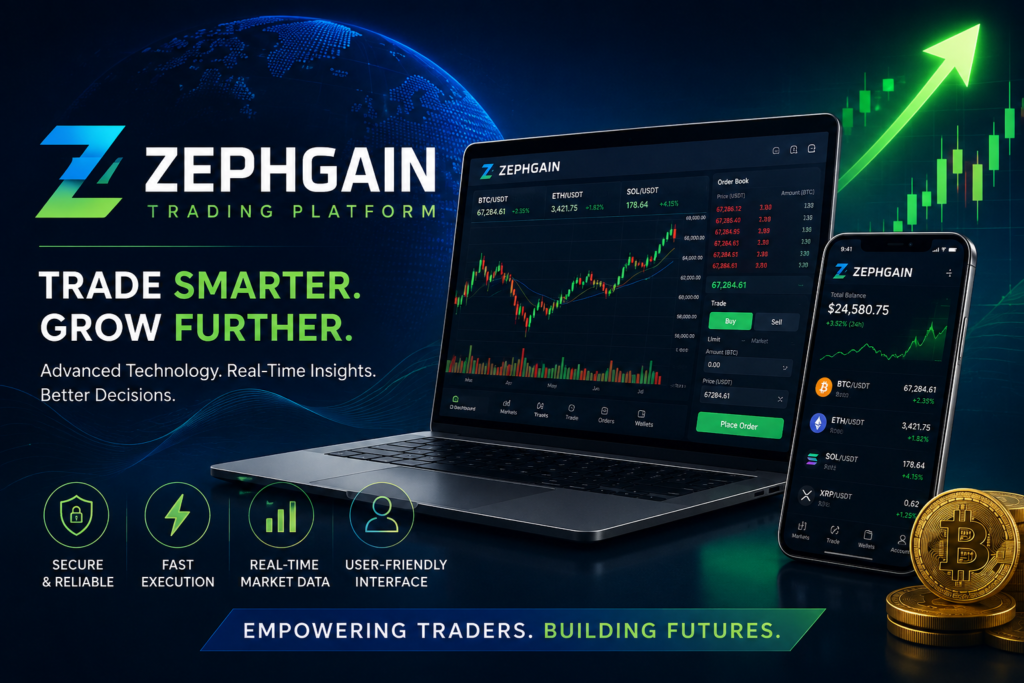
The retail trading landscape has evolved from clunky desktop interfaces and siloed brokerages into streamlined, algorithm-driven ecosystems. For years, individual traders faced a difficult trade-off: either spend hours daily charting technical indicators and deciphering macro data, or rely on opaque automated systems with minimal user control. Zephgain has emerged as a platform designed to bridge this gap, offering a unified, data-driven trading environment that combines algorithmic market analysis with intuitive manual and automated execution.
Whether you are looking to diversify into cryptocurrency, trade major forex pairs, or speculate on global indices and commodities, Zephgain positions itself as an accessible gateway for both novice entrants and time-constrained professionals. In this comprehensive, independent review, we dissect the Zephgain platform—examining its core architecture, step-by-step onboarding process, fee structures, security protocols, and real-world trading performance.
What Is Zephgain?
At its core, Zephgain is a cloud-based, multi-asset trading platform built to consolidate access to global financial markets into a single, cohesive dashboard. Rather than forcing traders to juggle separate accounts for cryptocurrency exchange, retail foreign exchange (forex), and equity contracts for difference (CFDs), Zephgain aggregates these instruments under one login.
What sets Zephgain apart from traditional online brokerages is its heavy integration of real-time algorithmic analysis. The platform utilizes continuously updating computational models that scan market data feeds, price volatility, and historical chart patterns across multiple timeframes. Instead of presenting raw data alone, Zephgain translates complex indicators into actionable insights, highlighting potential entry and exit zones for users.
The Hybrid Trading Philosophy
Zephgain operates on a hybrid execution model:
- Manual Trading Mode: For traders who prefer full autonomy, the platform provides clean charting tools, technical overlays, and rapid order execution. You analyze the market signals, set your own stop-loss and take-profit thresholds, and execute trades manually.
- Automated Trading Mode: For beginners learning market mechanics or busy professionals unable to monitor charts all day, Zephgain allows users to set customized parameters (such as maximum daily drawdown, asset class preferences, and risk tolerance) and let the platform’s execution engine identify and act on opportunities automatically.
Zephgain Platform Facts Table
Below is an at-a-glance technical and operational summary of the Zephgain trading platform:
| Specification Category | Platform Detail |
| Platform Name | Zephgain |
| Platform Type | Multi-Asset Hybrid Trading Platform (Manual & Automated) |
| Minimum Deposit | $250 USD (or equivalent in AUD, GBP, EUR) |
| Supported Asset Classes | Cryptocurrencies, Forex Pairs, Commodities, Index CFDs |
| Execution Modes | Manual Order Execution & Parameter-Driven Automation |
| Software Accessibility | Web-Based Dashboard (Compatible with Desktop, Tablet, & Mobile) |
| Account Fees | $0 Registration Fee, $0 Monthly Subscription Fee |
| Trading Cost Structure | Variable Bid-Ask Spreads + Zero Platform Commission on Standard Trades |
| Deposit / Withdrawal Methods | Credit/Debit Cards, Bank Wire Transfer, e-Wallets, Crypto Deposits |
| Security Architecture | 256-Bit SSL Encryption, Two-Factor Authentication (2FA), Segregated Accounts |
| Customer Support | 24/7 Multi-Channel Support (Live Chat, Email, Dedicated Account Specialists) |
| Target Audience | Beginners, Intermediate Traders, & Busy Investors Seeking Automation |
How Zephgain Works: The Technology Under the Hood
To understand whether a platform can deliver consistent performance, it is essential to look at how it processes market data. Zephgain relies on three foundational technological pillars:
High-Frequency Data Ingestion
Zephgain connects to multiple institutional liquidity providers and major crypto exchanges via low-latency application programming interfaces (APIs). This ensures that bid-ask spreads reflect real-time global pricing without the severe lagging or slippage common on legacy retail platforms during periods of high volatility.
Continuous Market Scanning
The platform’s analytical engine monitors thousands of instruments simultaneously. It scans for technical developments—such as breakout patterns, moving average crossovers, relative strength shifts, and sudden volume spikes. When an asset meets specific statistical criteria, the platform triggers a real-time notification on the user’s dashboard.
Parametric Risk Filtering
No trading system is immune to market risk. Zephgain incorporates customizable risk filters directly into its execution workflow. Users can enforce daily loss limits, cap the percentage of capital allocated to any single trade, and establish trailing stop-loss orders that automatically adjust as a position moves into profit.
Core Features of the Zephgain Platform
When evaluating any trading software, functionality and usability dictate the day-to-day user experience. Here is an in-depth breakdown of Zephgain’s standout features:
A. Real-Time Algorithmic Market Insights
Instead of overwhelming users with dozens of disconnected technical indicators, Zephgain condenses market momentum into digestible summaries. When a currency pair or token exhibits strong directional momentum, the system displays the underlying factors (e.g., volume surge or resistance breakout) alongside the risk-reward ratio.
B. Custom Automated Trading Workflows
Automation on Zephgain is not a rigid “black box.” Users retain control over the parameters governing automated execution:
- Asset Whitelisting: Select specifically which assets the automated system is permitted to trade.
- Position Sizing: Define exact dollar amounts or capital percentages per trade.
- Time-of-Day Controls: Restrict automated trading to high-liquidity market sessions (such as the London or New York open).
C. Web-Based, Cross-Device Dashboard
Zephgain is entirely web-based, removing the need for hefty software installations or localized desktop clients. The responsive interface adapts seamlessly across large multi-monitor desktop setups, tablets, and smartphones, ensuring that account management and trade execution remain accessible anywhere with an internet connection.
D. Multi-Asset Diversification
A single Zephgain account grants access to four primary asset classes:
- Cryptocurrencies: Major digital assets including Bitcoin (BTC), Ethereum (ETH), Solana (SOL), and high-liquidity altcoins.
- Forex Pairs: Major, minor, and exotic fiat currency pairs (EUR/USD, GBP/USD, USD/JPY, AUD/CAD).
- Commodities: Precious metals (Gold, Silver) and energy contracts (Crude Oil, Natural Gas).
- Global Indices: CFDs tracking major world stock indexes (S&P 500, NASDAQ 100, FTSE 100, DAX 40).
Step-by-Step Registration & Onboarding Process
Getting started with Zephgain is structured to be fast while adhering to industry-standard account verification protocols. Below is the complete onboarding walk-through:
Step 1: Complete the Official Registration Form
Navigate to the Zephgain homepage and locate the registration portal. You will be asked to input basic personal details:
- Legal First and Last Name
- Active Email Address
- Valid Phone Number (with correct international country code)
Tip: Ensure your contact information is accurate, as a dedicated onboarding specialist will typically reach out via phone or email to assist with initial verification.
Step 2: Account Verification & Compliance check
To maintain a secure ecosystem and prevent unauthorized account usage, Zephgain requires identity confirmation. You may be asked to provide standard documentation, such as a government-issued photo ID (passport or driver’s license) and a recent proof-of-address document (utility bill or bank statement). This process is straightforward and typically clears within minutes to a few hours.
Step 3: Make Your Initial Capital Deposit
Once your account is active, you must fund your trading wallet. Zephgain requires a minimum deposit of $250.
- Important Note: This $250 is not a platform fee or subscription cost. It represents your active trading capital, which remains 100% yours to deploy across your chosen markets or withdraw in accordance with platform rules.
- Payment Methods: Deposits can be made via Visa, Mastercard, bank wire transfers, and select e-wallets or crypto deposits depending on your jurisdiction.
Step 4: Familiarize Yourself with the Dashboard & Demo Features
Before deploying live capital, spend time exploring the user dashboard. Familiarize yourself with how charting tools function, where to locate asset lists, and how to read real-time algorithmic alerts. Many new users benefit from testing strategies using simulated or small-position trades first.
Step 5: Configure Trading Parameters & Begin Trading
Select your operational mode:
- If trading manually: Open the asset chart of your choice, evaluate the technical overlays, set your stop-loss limits, and execute your buy or sell order.
- If utilizing automation: Open the settings panel, define your maximum trade size, set your daily risk cap, select your targeted asset classes, and activate the automated execution engine.
Fee Structure, Costs, and Transparency
Unexpected commissions and hidden account fees can erode a trader’s capital over time. Zephgain employs a transparent fee model designed to keep trading costs predictable:
Zero Registration or Subscription Fees
Unlike some proprietary analytical platforms that charge monthly SaaS (Software-as-a-Service) fees, Zephgain charges $0 to open an account and imposes no monthly recurring subscription costs for access to its algorithmic insights.
Spread-Based Trading Costs
Zephgain generates revenue primarily through bid-ask spreads—the minor difference between the buy price and sell price of an asset. Spreads on highly liquid markets (such as EUR/USD or Bitcoin) are kept competitive, ensuring that traders retain the majority of their gross profits.
Deposit and Withdrawal Policies
- Deposits: Zephgain does not charge internal processing fees for funding your account. (Note: Your bank or payment card provider may apply standard currency conversion or wire fees depending on your region).
- Withdrawals: Withdrawals are processed through the dashboard without hidden payout penalties. Users can request transfers back to their originating bank account or payment method, with processing windows generally taking between 24 and 72 hours depending on banking settlement times.
Security Architecture and Account Protection
In an industry where cybersecurity threats are a persistent reality, evaluating a trading platform’s protective infrastructure is paramount. Zephgain implements several layers of defense to protect user credentials and funds:
End-to-End Encryption
All data traffic between the user’s browser and Zephgain’s servers is protected using 256-bit SSL (Secure Socket Layer) encryption. This prevents third parties from intercepting login credentials, personal data, or payment information.
Two-Factor Authentication (2FA)
Users are strongly encouraged to enable 2FA on their accounts. By requiring a secondary time-sensitive code generated by an authenticator app upon login or before processing withdrawal requests, the platform significantly mitigates the risk of unauthorized account access.
Segregated Client Funds
Operational revenue is kept strictly independent of user trading capital. Client deposits are held in segregated accounts with reputable tier-1 financial institutions, ensuring that your funds are used solely for executing your trades.
Who Is Zephgain Best Suited For?
Because Zephgain combines automated tools with manual charting capabilities, it serves a diverse demographic of market participants:
1. Beginner Traders
Newcomers to financial markets often struggle with information overload—deciphering candlestick patterns, macroeconomic calendars, and indicator formulas can take months. Zephgain’s algorithmic summaries act as an educational bridge, highlighting why a market is moving while allowing beginners to trade with automated risk controls.
2. Time-Constrained Working Professionals
Many individuals want exposure to financial markets but hold full-time careers that prevent them from staring at screens during active trading hours. For this group, Zephgain’s automated execution mode provides an efficient way to participate in intraday trends without manual oversight.
3. Intermediate & Diversified Traders
Experienced retail traders who trade one asset class (such as stocks) but wish to branch into cryptocurrencies or forex will find Zephgain’s consolidated multi-asset interface invaluable. It eliminates the friction of managing separate exchange accounts and software packages.
Pros and Cons of Zephgain
To provide a balanced perspective, here is an objective summary of where Zephgain excels and where users should exercise awareness:
Pros
- Unified Multi-Asset Environment: Trade cryptocurrencies, forex, commodities, and index CFDs from one dashboard.
- Intelligent Automation: Configurable automated trading rules that allow users to automate execution while retaining strict risk limits.
- Low Barrier to Entry: A reasonable minimum deposit requirement of $250 makes it accessible to standard retail traders.
- No Monthly Software Fees: Free account registration with zero subscription or recurring maintenance fees.
- Web-Based Usability: Seamless, responsive design that works across desktops, laptops, tablets, and smartphones without localized downloads.
Cons
- Initial Capital Requirement: While $250 is standard across the retail trading industry, it may still be a barrier for individuals looking to test with micro-deposits under $50.
- Requires Active Risk Management: Automated trading is a tool, not a guaranteed income generator; users must actively set stop-loss limits to protect against sudden volatility.
- Regional Restrictions: Due to varying regulatory frameworks, specific CFD or derivative products may have restricted availability in certain jurisdictions.
Frequently Asked Questions (FAQs)
Below are detailed, authoritative answers to the most common questions prospective users ask about the Zephgain trading platform:
1. Is Zephgain a legitimate trading platform?
Yes. Zephgain is a functional, cloud-based trading software platform designed to connect users to multi-asset financial markets. It implements SSL encryption, strict identity verification protocols, and transparent spread-based pricing without recurring subscription charges.
2. What is the minimum deposit required to trade on Zephgain?
The minimum initial deposit required to activate a live trading account is $250 USD (or the equivalent in local currency). This deposit acts entirely as your trading capital to buy and sell assets on the platform.
3. Can I use Zephgain on my mobile phone?
Yes. Zephgain is built as a responsive web application. You can access your full account dashboard, monitor algorithmic alerts, adjust automated trading settings, and execute manual trades directly through your smartphone’s web browser without needing to download a separate mobile app.
4. How does the automated trading feature work?
Zephgain’s automated system uses algorithms to scan live market data for high-probability technical setups. When you activate automation, the system executes buy or sell orders based on predefined rules. You maintain control by setting limits on trade sizing, daily stop-losses, and which asset classes the system can trade.
5. Are there hidden fees or subscription costs on Zephgain?
No. There are no registration costs, account setup fees, or monthly subscription charges. Zephgain operates on a spread-based fee model, meaning costs are factored into the minor price difference between the bid and ask prices of traded assets.
6. How long do withdrawal requests take to process?
Withdrawal requests submitted through the Zephgain user dashboard are typically reviewed and processed within 24 to 72 hours. The exact time it takes for funds to reflect in your bank account depends on your payment provider and local banking settlement schedules.
7. What asset classes can I trade on Zephgain?
You can trade across four primary financial markets:
- Major and emerging Cryptocurrencies (e.g., BTC, ETH, SOL)
- Forex currency pairs (e.g., EUR/USD, GBP/JPY)
- Major Commodities (e.g., Gold, Silver, Crude Oil)
- Global Stock Indices (e.g., S&P 500, NASDAQ 100)
8. Is prior trading experience required to use Zephgain?
No prior trading experience is required. The platform is specifically designed with an intuitive interface and clear analytical summaries to accommodate beginners, while still offering the technical depth and execution speed required by intermediate traders.
Final Verdict: Should You Trade with Zephgain?
Navigating modern financial markets requires tools that can process large volumes of data without sacrificing user autonomy. Zephgain succeeds by offering a balanced ecosystem: it strips away the clutter of traditional charting software while avoiding the rigid, uncontrollable nature of standard trading bots.
With its $250 initial capital requirement, robust 256-bit encryption, multi-asset diversification, and flexible hybrid execution modes, Zephgain stands out as a compelling choice for retail traders in 2026. Whether your goal is to manually trade crypto breakouts or automate intraday forex strategies while you work, the platform provides the infrastructure and clarity needed to trade with confidence.